79 Müllerstraße, 13349 Berlin
Berlin Public Transportation Authority (BVG)
Gruber + Popp Architects BDA (Phases 1–4), Möhring Architects (Phases 5–8)
Structural Engineering: GTB-Berlin
Ronja Engelhardt (LPH 1–4)
Zoe Popp
2025
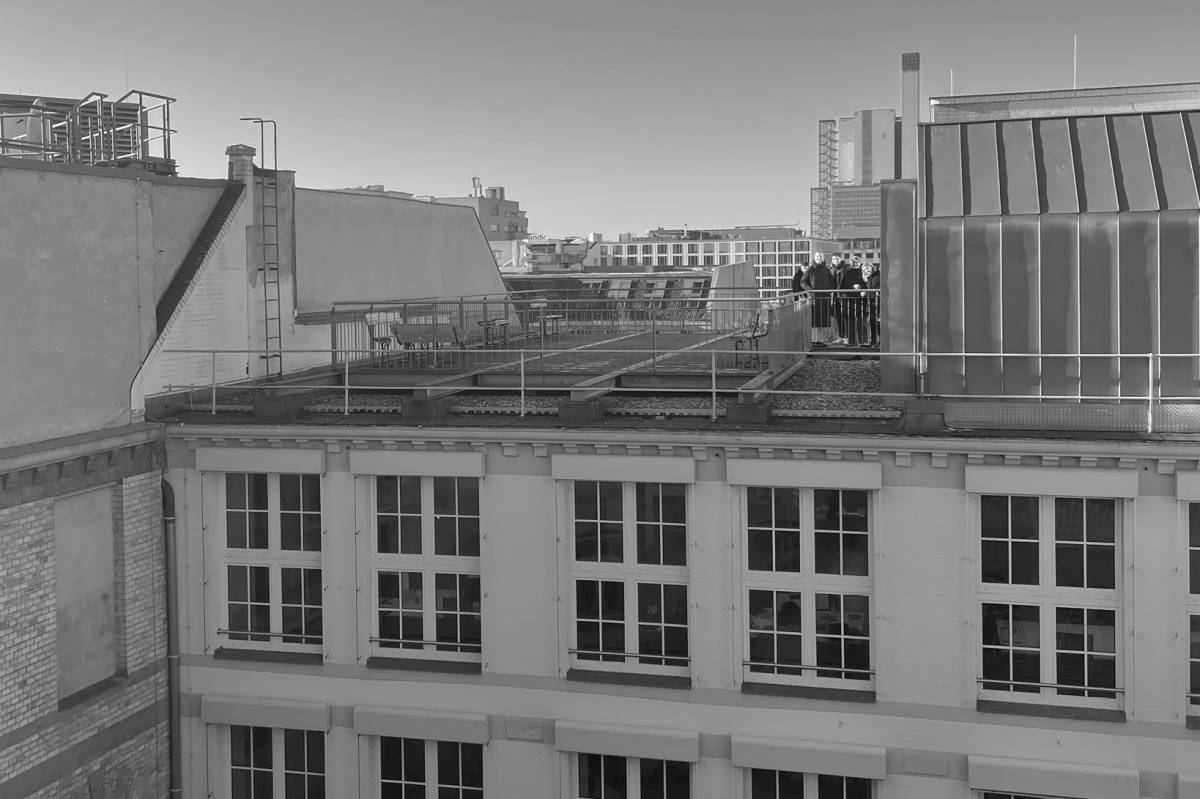
The bus depot on Müllerstraße in Berlin-Wedding is a significant, historically protected complex, built in 1927 as a tram depot in the Expressionist style. It has been used for bus operations since 1960. The complex consists of two striking towers at the entrance and a large hall, which is used by the Berlin Public Transport Authority. The surrounding residential buildings enclose the courtyard on three sides.
In close consultation with the historic preservation authorities, a new building for the operations command center was planned at the entrance to the site. This is where personnel and vehicle assignments are coordinated and daily bus operations are monitored; given the challenging working conditions, a space was designed to foster a sense of community and provide a friendly atmosphere. The freestanding structure with a square floor plan blends harmoniously into the historic context, yet remains recognizable as a contemporary element that contributes to the site’s identity.
With the exception of the concrete foundation slab, the structural framework is constructed entirely of wood. An orthogonal grid of wooden beams forms the ceiling and serves as a design element: inside, the structure remains exposed and is visible throughout the building thanks to the skylights in the interior walls.
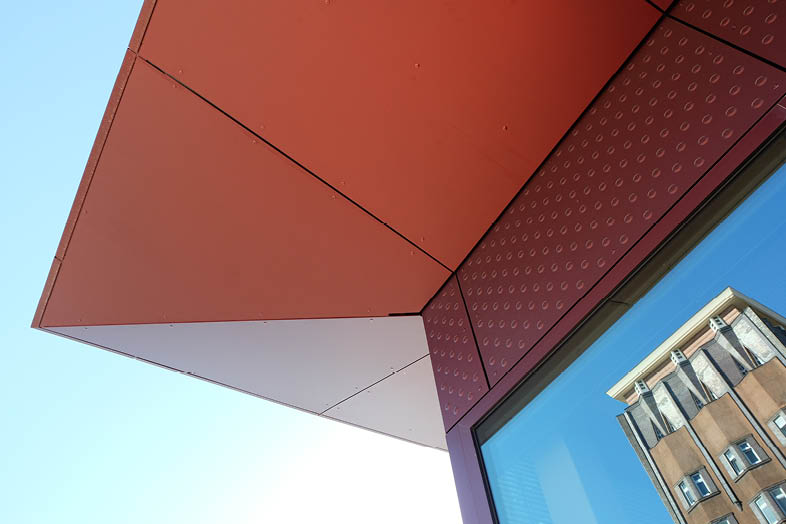
The exterior walls are constructed using a prefabricated wood-frame system. An anodized aluminum sheet is planned for the facade. A dark red color was chosen, which is based on the color scheme of the existing buildings and thus creates a design connection to the existing structure.
The color scheme for the new building was determined following an analysis of the colors of the existing structure—in consultation with the historic preservation office, a dark red was chosen for the sheet metal cladding on the new building’s facade, which is inspired by the historic clinker brick facades.
In the center of the building is a multifunctional built-in unit: inside, it serves as a changing room for employees; on the outside, there is a built-in kitchen on one side and built-in cabinets on the opposite side.