Berlin Public Transportation Authority (BVG)
Gruber + Popp Architects, BDA
Doris Gruber, Bernhard Popp, Cristiana Pereira,
Ronja Engelhardt
Antje Gießmann, Doris Gruber
studiorosarot, Stefan Amann
2024/2025
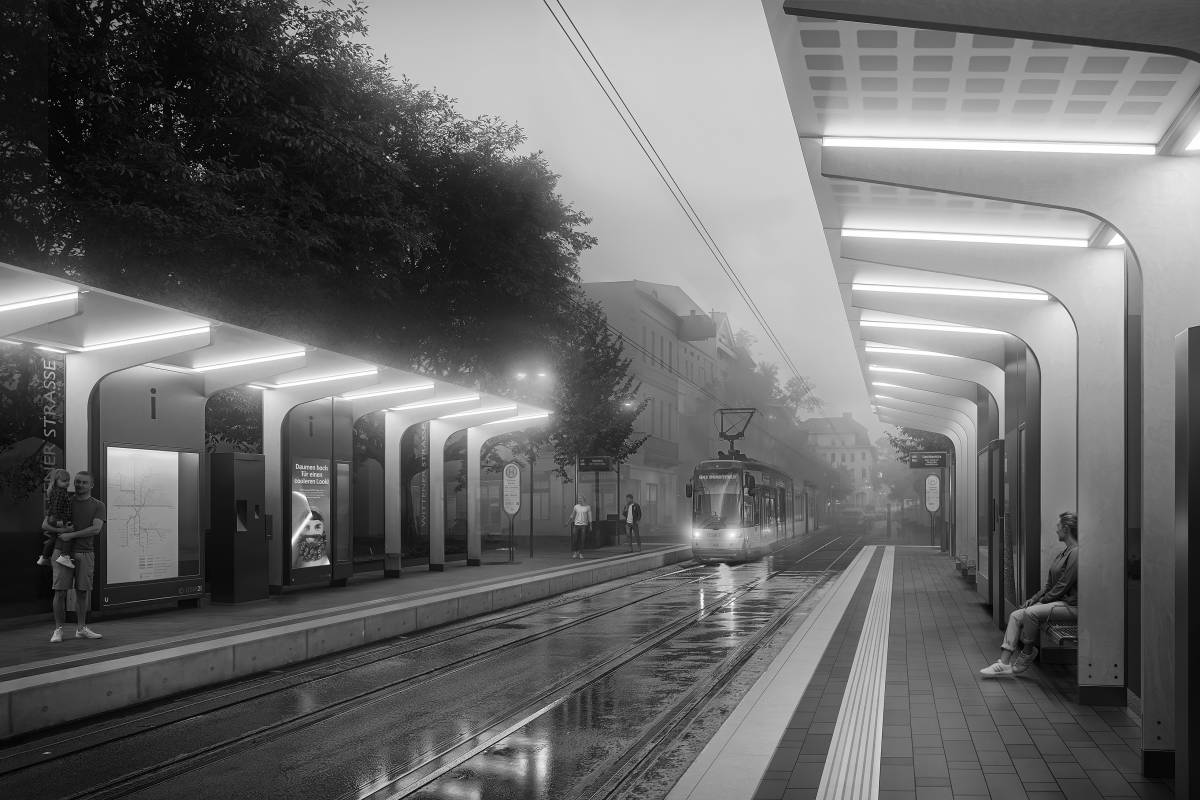
Berlin's bus shelters are important hubs in the city's public transit network. They provide wayfinding, information, and shelter from the elements.
For years, public transportation has seen rising ridership. The BVG is expanding its route network and developing on-demand services. Current guidelines, demographic change, increased accessibility requirements, and a growing awareness of sustainability are further reasons to rethink the stop layout for buses and trams.
Through a workshop process, experts from various departments of the BVG, in collaboration with Gruber + Popp Architects BDA, developed a new bus shelter concept based on a comprehensive list of requirements that combines functional, aesthetic, and communicative aspects.
In the spring of 2024, two prototypes were installed at the BVG depot in Lichtenberg: a standard bus shelter and a single-element shelter.
Good for the environment: The new bus shelters contribute to biodiversity, the urban climate, conservation, and recyclability.
The new bus shelters promote resource conservation, recyclability, and an improvement in the urban environment. They can be equipped with green roofs or photovoltaic panels, which provide self-sufficient lighting and have a positive impact on biodiversity and the microclimate. The structure is based on fully recyclable materials (steel and glass), and the modular design allows for material-specific recycling.
The bus shelters are suitable for both new construction and the modernization of existing bus stops. Elements from the old “City Line” model (e.g., frames or glass panels) can be reused.
Thanks to the modular design, mass production, a high degree of customization, and adaptation to various locations are possible. It also facilitates repairs and the replacement of individual parts, which increases cost-effectiveness and flexibility.
Good news for passengers: The new bus shelters offer better wayfinding, more comfort, and improved amenities.
With its color scheme and brightness, the bus shelter makes it easier to find and navigate—even in the dark. Each bus shelter offers visibility and safety to passengers 24 hours a day. Maximum space is created for passengers under the roof.
A new feature is the Mono-Element, which serves as a mobility hub—for example, in outlying districts—or as a supplement to existing stops. The Mono variant supports the implementation of individualized and flexible on-demand services.
Good for the city: The new bus shelters form a cohesive design element with the buses and streetcars.
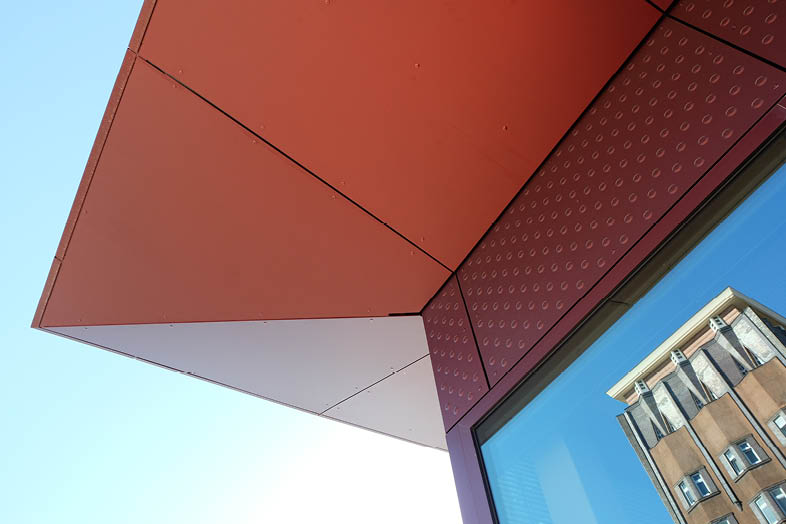
More than just street furniture: With its striking yet timeless roof shape, illuminated cube, and distinctive BVG yellow, the bus shelter makes an architectural contribution to the mobility transition in the capital. With their positive symbolic impact, the new bus shelters send a visible signal about the appeal of public transit in Berlin. Functionally, structurally, and aesthetically, they form a high-performance overall concept that can be used and further developed for at least 30 years.
On its blog “Umweltzone Berlin,” BUND has an interesting article on its blog “Umweltzone Berlin”: It’s about the BVG bus shelters redesigned by Gruber + Popp Architects and the discussion surrounding them in the “Public Spaces Design Advisory Board.”